
The Secret Agent of the Silk Road: Bento de Góis and the Great "Cathay" Mystery
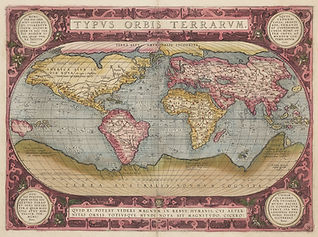
For the early 1600s, the world was suffering from a bit of a geographic identity crisis. As we’ve explored in my post about how China became known as "China" thanks to the Portuguese, the seafaring Portuguese had popularized the name China (derived from the Sanskrit Cina, likely referring to the ancient Qin dynasty). But while the sailors were docking in the south, ancient legends—and the ghost of Marco Polo—insisted there was a second, even more magnificent empire to the north called Cathay.
Were they the same? Or were there two massive Asian superpowers? The question wasn't just academic—it was a massive geopolitical puzzle, one with religious significance as the Portuguese had already discovered that China did not have Christians, but visiting Silk Road merchants in Mughal India reported that there were, on the other hand, many Christians in Cathay. To solve this, a man named Bento de Góis set off on one of history’s most daring undercover missions.

Before we follow Góis into the desert, we have to look at the name. "Cathay" comes from the Khitan (契丹 or Qìdān) people, a nomadic group that ruled Northern China as the Liao Dynasty centuries earlier.
Because the Khitans were the first "Chinese" power that Central Asian and Russian traders encountered, the name stuck. Even today, if you travel to Moscow, you won’t find a train to "China"—you’ll find one to Kitay (Китай). It’s the same in Bulgarian, Tatar, and Kazakh. Even the airline Cathay Pacific keeps this 1,000-year-old linguistic relic alive in our modern airports.
While the Portuguese were spreading the word "China" via the sea, "Cathay" was the name traveling by camel.

Born in the Azores, Bento de Góis didn't start as a scholar. He was a soldier in the Portuguese army in India, but after a spiritual awakening in a small chapel in Travancore, he traded his armor for the Jesuit habit. Because he was fluent in Persian—the lingua franca of the Silk Road—and knew the "Saracen" (Muslim) customs of the Mughal court, he was the perfect choice for a mission that sounded like a suicide pact: travel overland from India to China to see if "Cathay" actually existed.
Góis started his journey at the court of the Mughal Emperor Akbar in Lahore. To the Mughals, the Portuguese were known as Feringhis (Franks). While Góis saw himself as an explorer, the Mughal records show that the court viewed these Westerners with a mix of intellectual curiosity and practical calculation—they were valued for their exotic mechanical clocks and strange European art, but were ultimately seen as just another group of traders in a very cosmopolitan empire.
"In the eyes of the Mughal court, these men were curiosities... valued for their exotic arts and strange mechanical clocks, but viewed as 'ocean-going barbarians' who had much to learn about the refinements of the inland world." — Adapted from the Akbarnama (Chronicles of Akbar).
Góis then pulled off a masterclass in 17th-century identity theft. He grew a long beard, donned the robes of an Armenian merchant, and took the name Abdullah Isai ("Abdullah the Christian") before joining a merchant caravan heading deep into the heart of Asia. While European maps for this region were blank, the merchants Góis traveled with were part of a vast web of exchange.

Leaving Lahore in 1602, Góis embarked on a grueling multi-year journey through what is now Pakistan and Afghanistan, trekking through the “Roof of the World” (the Pamir Mountains) and the shifting sands of the Gobi. He traveled in caravans of hundreds of merchants, dodging bandits and navigating the treacherous politics of local Khans.
In his letters, Góis describes the sheer exhaustion and the constant threat of discovery. At one point, he was nearly killed by robbers, hiding in the jungle until nightfall. Once, in the middle of nowhere, he met a merchant who had wine—some form of alcohol—which was unheard of in those strictly Muslim regions. It was a hint that he was getting closer to a different kind of civilization.
"Nesta cidade de Cialis, encontrámos alguns mercadores que vinham de Pequim... e por eles soubemos que a China era o que os antigos chamavam Catayo."
"In this city of Cialis, we met some merchants coming from Beijing... and through them we learned that China was what the ancients called Cathay." — Bento de Góis, as recorded in the Fonti Ricciane.
[Note: Historians believe that what Góis called Cialis was located in today’s Xinjiang region in northwest China, likely either Karasahr (known as 焉耆 or Yānqí in Chinese) or Korla (库尔勒 or Kù'ěrlè).]
After three long years, Góis reached the city of Suzhou (肃州 or Sùzhōu). Note that this is not the famous "Venice of the East" near Shanghai (known as 苏州 or Sūzhōu in Chinese), but a strategic desert outpost in modern-day Gansu (甘肃).

This was the end of the line. Suzhou sat at the Jiayuguan Pass (嘉峪关), the western terminus of the Ming Great Wall. To the Ming bureaucracy, anyone arriving from the West was a potential spy or a tribute bearer who had to be strictly managed and kept at the border. This was the "Customs House" of the Silk Road.
For a traveler in 1605, being "stuck in Suzhou" meant being caught in a bureaucratic limbo at the Empire's border. He had to wait for months for permission to proceed to Beijing. It was this grueling wait in the harsh, dry climate of the northwest that ultimately broke his health.
"Aqui em Sochieu... he o fim daquelle Reino, e onde se poem as guardas para não entrar nem sahir ninguem sem licença."
"Here in Suzhou... is the end of that Kingdom, and where guards are placed so that no one may enter or leave without a permit." — Fernão Guerreiro, Relaçam Anual (1605)
Góis managed to exchange messages with the Jesuits in Beijing. It was here, at the edge of the Gobi, that he finally confirmed beyond any doubt the world-changing truth: Cathay was China.

Góis died in Suzhou in 1607, just days after a fellow explorer reached him. He never saw the Forbidden City, but he achieved something monumental: he erased a ghost from the map. Because of Góis, European cartographers stopped drawing two Chinas. His journey proved that the maritime world the Portuguese had mapped and the ancient Silk Road were two ends of the same string. He reminds us that the world has always been interconnected—whether you call it Kitay, Cathay, or China, it was the same destination, reached by different brave souls taking very different paths.


The article tells a fascinating story about Bento de Góis and his journey along the Silk Road, highlighting the challenges of exploration and the search for knowledge in a distant world. I enjoyed learning how determination and curiosity helped uncover important connections between cultures and regions. As a student, I often read historical adventures while balancing coursework, and I came across do my online exam discussions during particularly busy semesters. It reminded me that perseverance and a desire to learn can lead to remarkable discoveries.